
Aquarium Water Testing
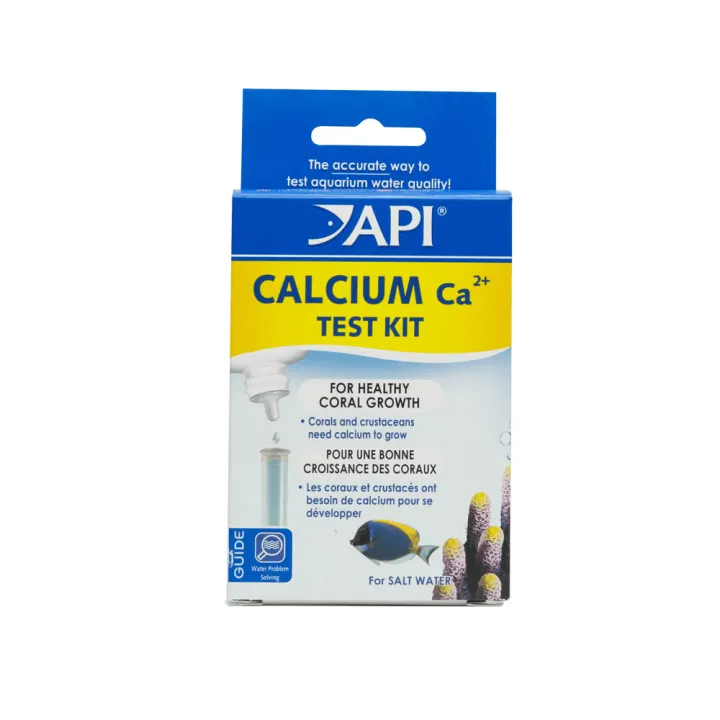
API CALCIUM TEST KIT
Helps monitor calcium and prevent invisible water problems that can be harmful to coral & crustaceans
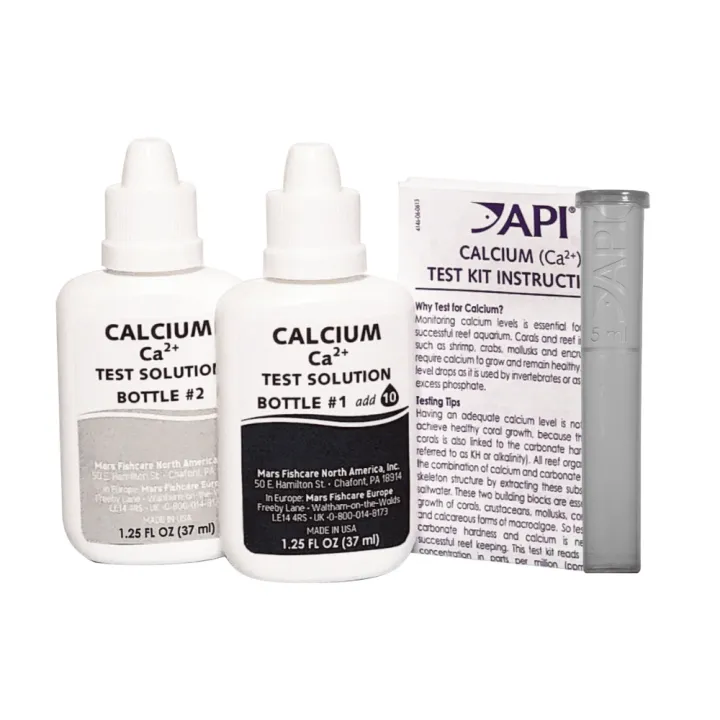
Keep your aquatic life healthy and thriving by testing your aquarium water's calcium levels regularly with this easy-to-use API CALCIUM TEST KIT for aquariums.Testing water parameters weekly helps prevent invisible water problems that can be harmful to fish. Calcium is one of the most important elements in a reef aquarium. Reef invertebrates such as corals, crustaceans, mollusks and even some types of encrusting algae need calcium to grow and remain healthy. Over time, calcium levels drop as invertebrates use calcium in aquarium water. The API CALCIUM TEST KIT measures calcium levels as low as 20mg/L. It contains two calcium test bottles, capped test tube, and instructions & colour card. For use in reef aquariums.
With API Aquarium products, it’s easy to keep a beautiful saltwater, freshwater or reef aquarium. For over 50 years, API has been creating innovative, research-driven solutions that make it easier to care for your fish and aquarium. API Aquarium Treatment Supplies are designed to work in conjunction with each other to provide best results to control algae, promote healthy bacterial growth and help control and cure fish diseases and conditions such as ich and fin rot. They work to provide a safe, hospitable environment for fish such as tropical community fish, cichlids, goldfish and more. With API, you can spend more time admiring your fish, and less time scrubbing your tank. Make sure to use all products as directed in order to ensure the best results.
Related Products
-
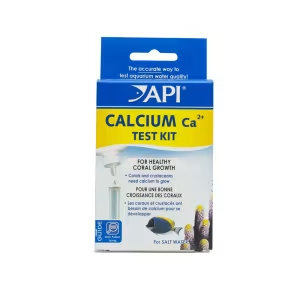
Keep your aquatic life healthy and thriving by testing your aquarium water's calcium levels regul
-
Measure the most important reef aquarium levels including calcium, carbonate hardness (KH), phosp
-
Keep your fish healthy and thriving by testing your aquarium water's KH levels regularly with thi
-
Keep your fish healthy and thriving by testing your aquarium water regularly with easy-to-use API
Frequently Asked Questions (FAQs)
No, calcium levels need to be monitored and maintained in reef or marine aquariums, as improper levels can be harmful to corals and crustaceans.